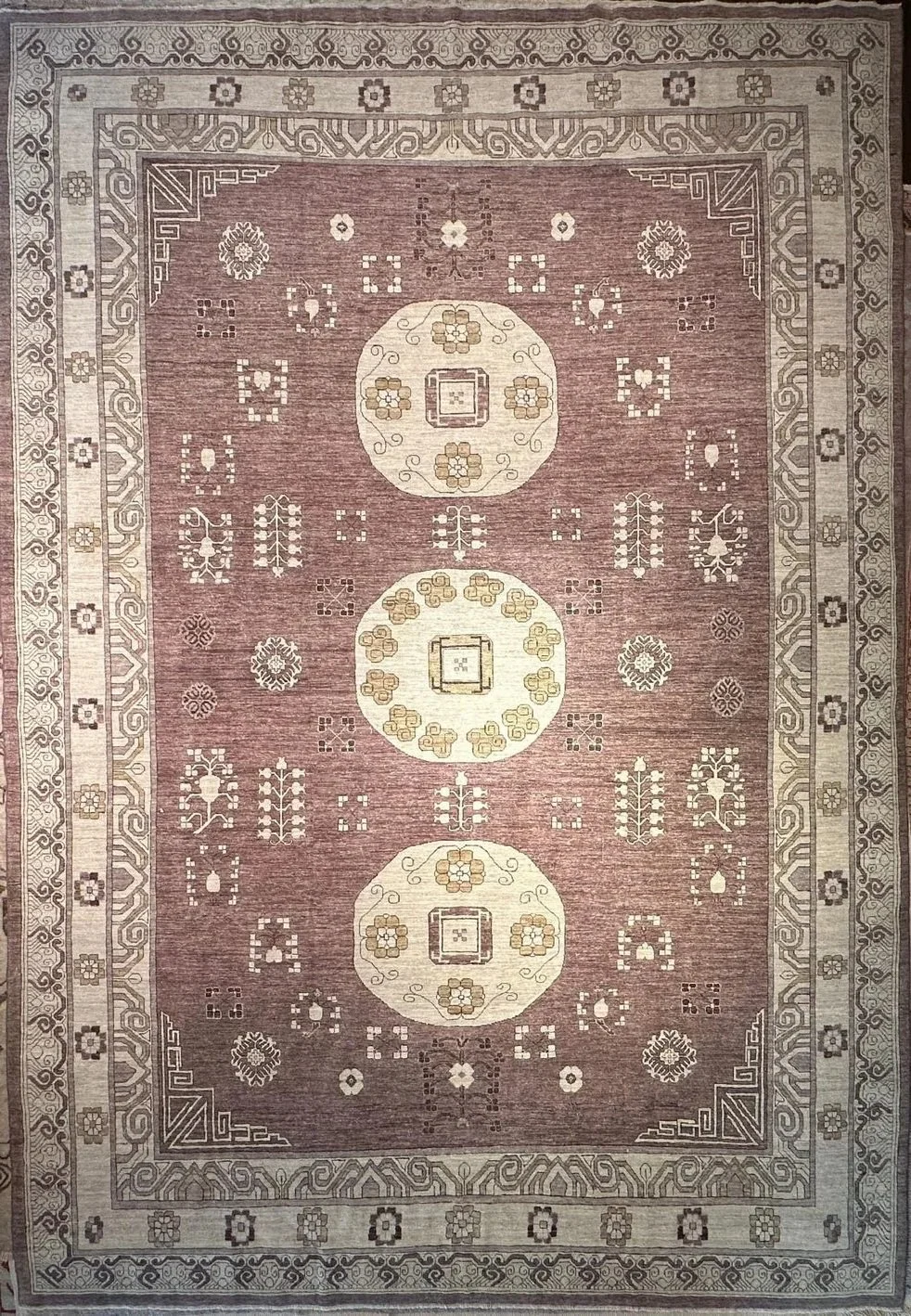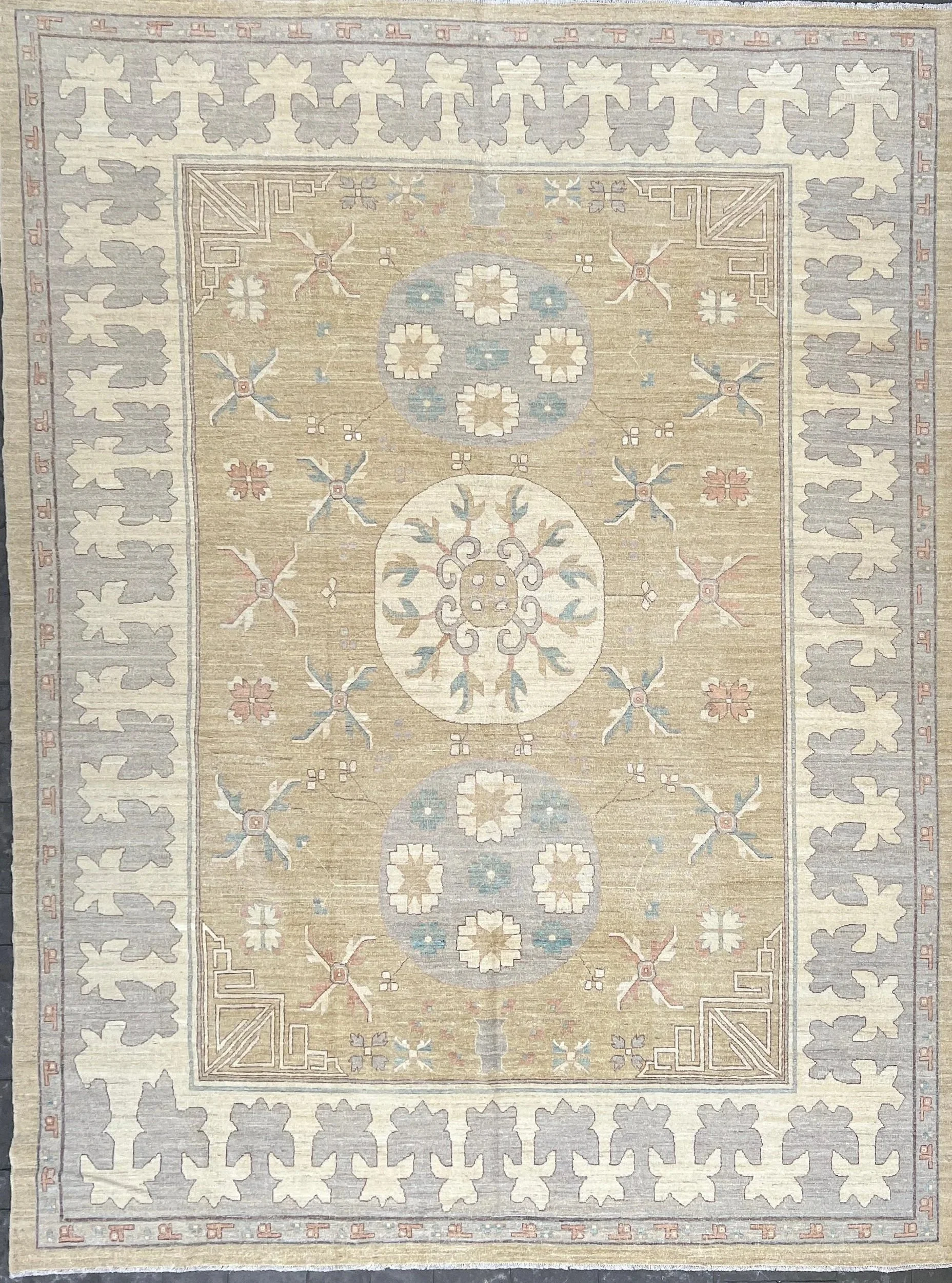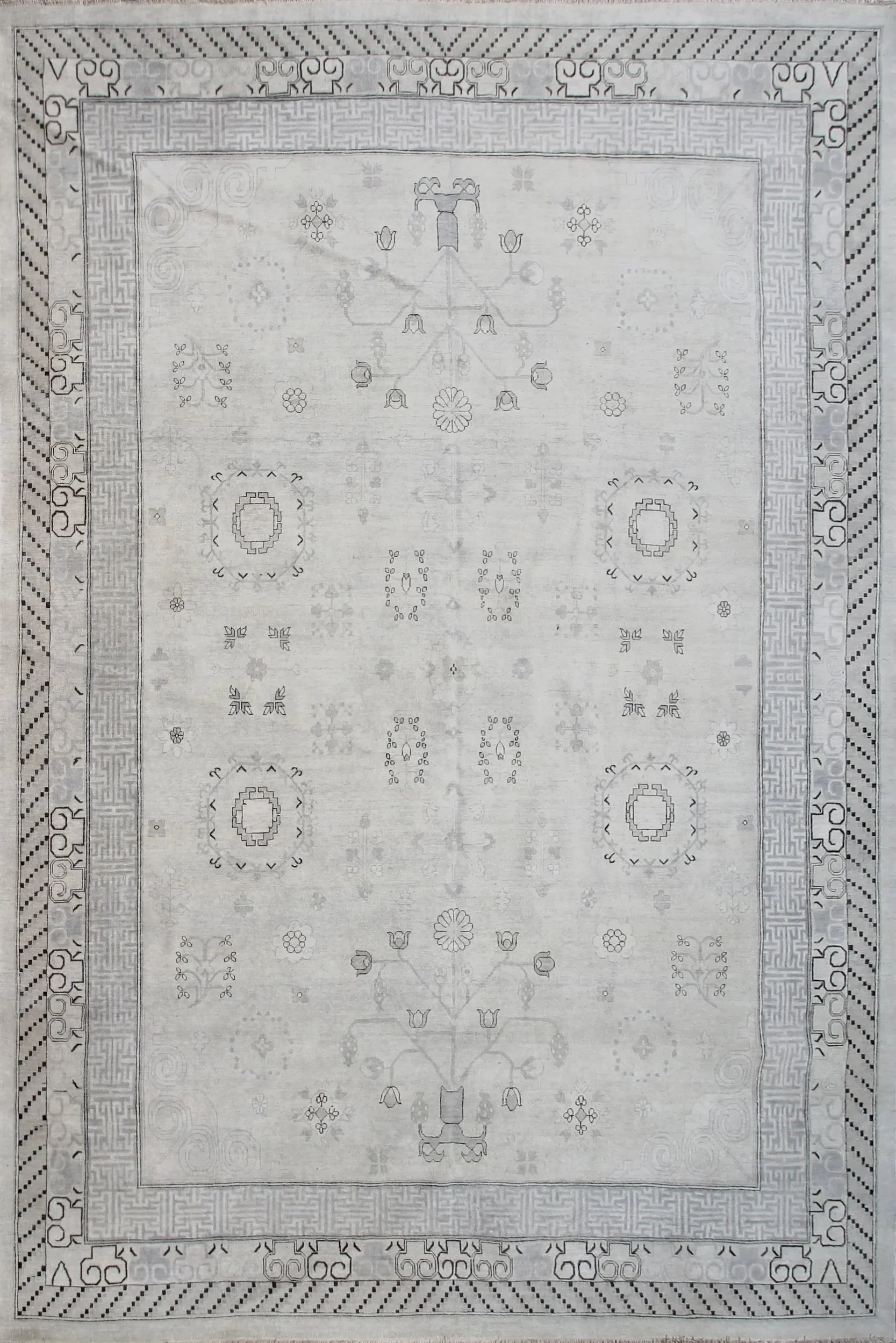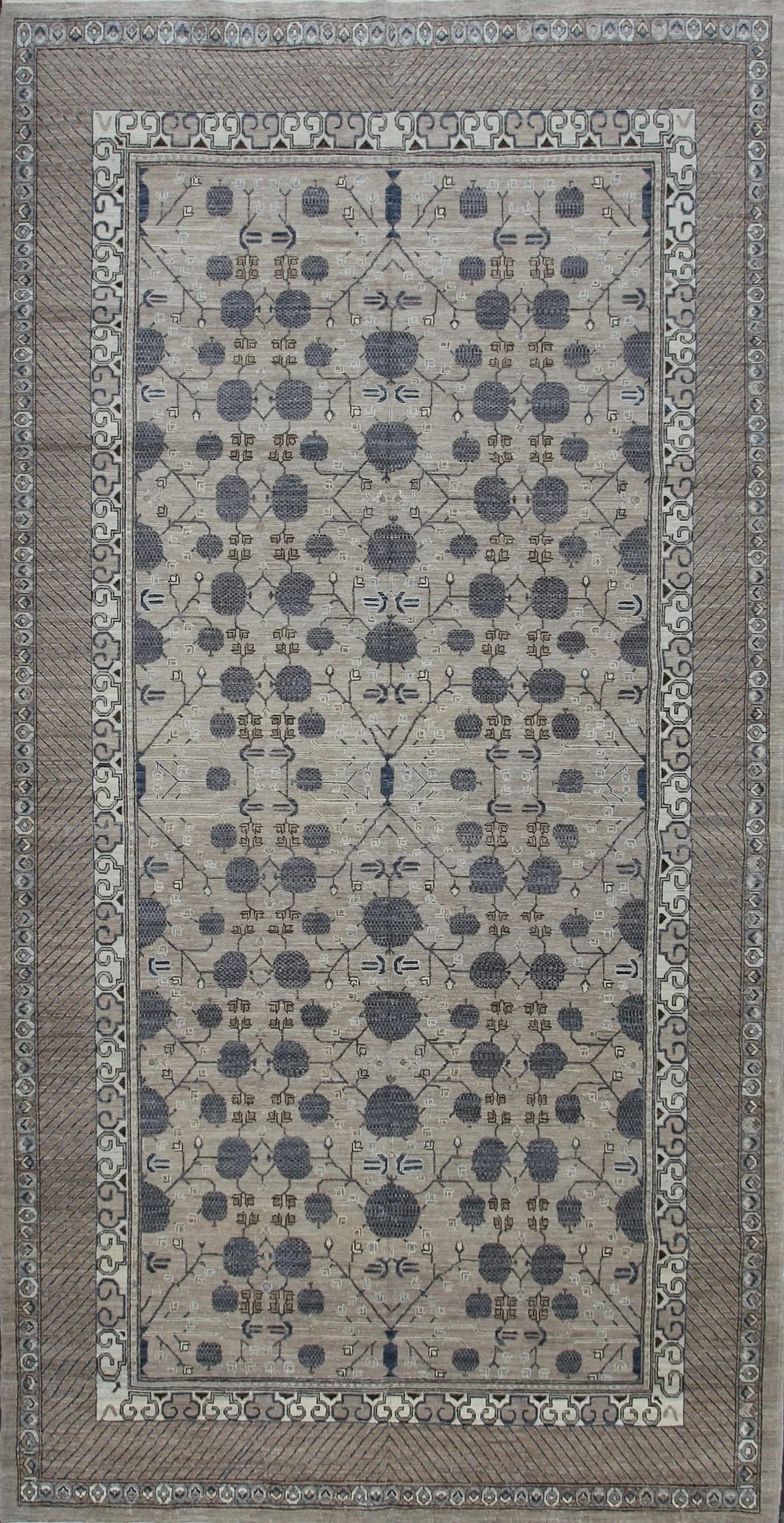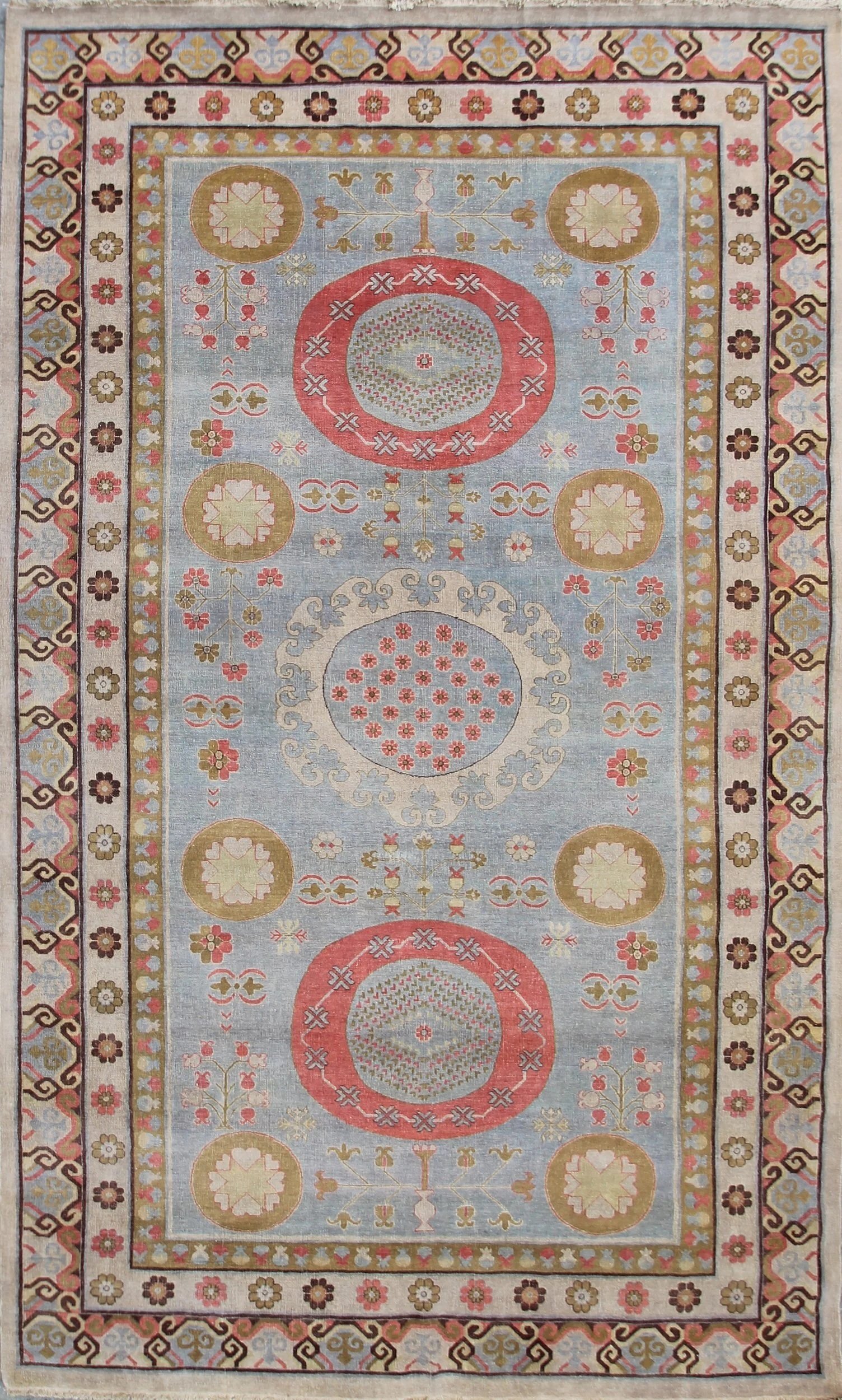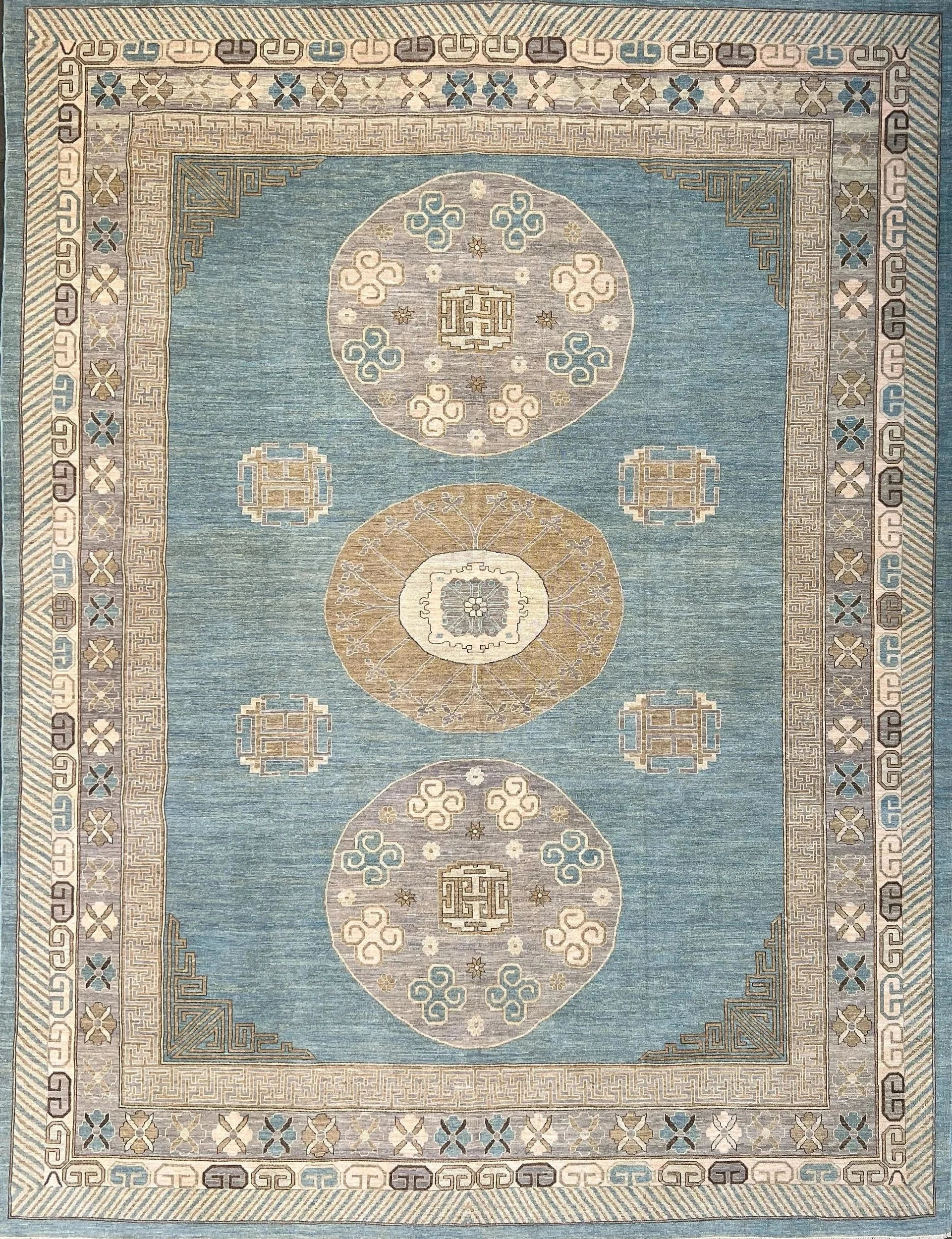
Samarkand refers to a historic rug category named after the legendary Silk Road city of Samarkand in present-day Uzbekistan, a long-standing cultural crossroads of Central Asia with Persian, Chinese, and Turkic artistic influences. Rugs labeled Samarkand traditionally feature expressive patterns that blend geometric and floral elements, reflecting the stylistic diversity that spread across the region through historic trade and weaving exchanges. While the exact production centers varied historically, the name evokes the region’s rich textile heritage and its association with vibrant color and balanced composition. This interpretation is hand-woven in Afghanistan using traditional hand-knotting techniques and crafted entirely from wool.
Samarkand refers to a historic rug category named after the legendary Silk Road city of Samarkand in present-day Uzbekistan, a long-standing cultural crossroads of Central Asia with Persian, Chinese, and Turkic artistic influences. Rugs labeled Samarkand traditionally feature expressive patterns that blend geometric and floral elements, reflecting the stylistic diversity that spread across the region through historic trade and weaving exchanges. While the exact production centers varied historically, the name evokes the region’s rich textile heritage and its association with vibrant color and balanced composition. This interpretation is hand-woven in Afghanistan using traditional hand-knotting techniques and crafted entirely from wool.