
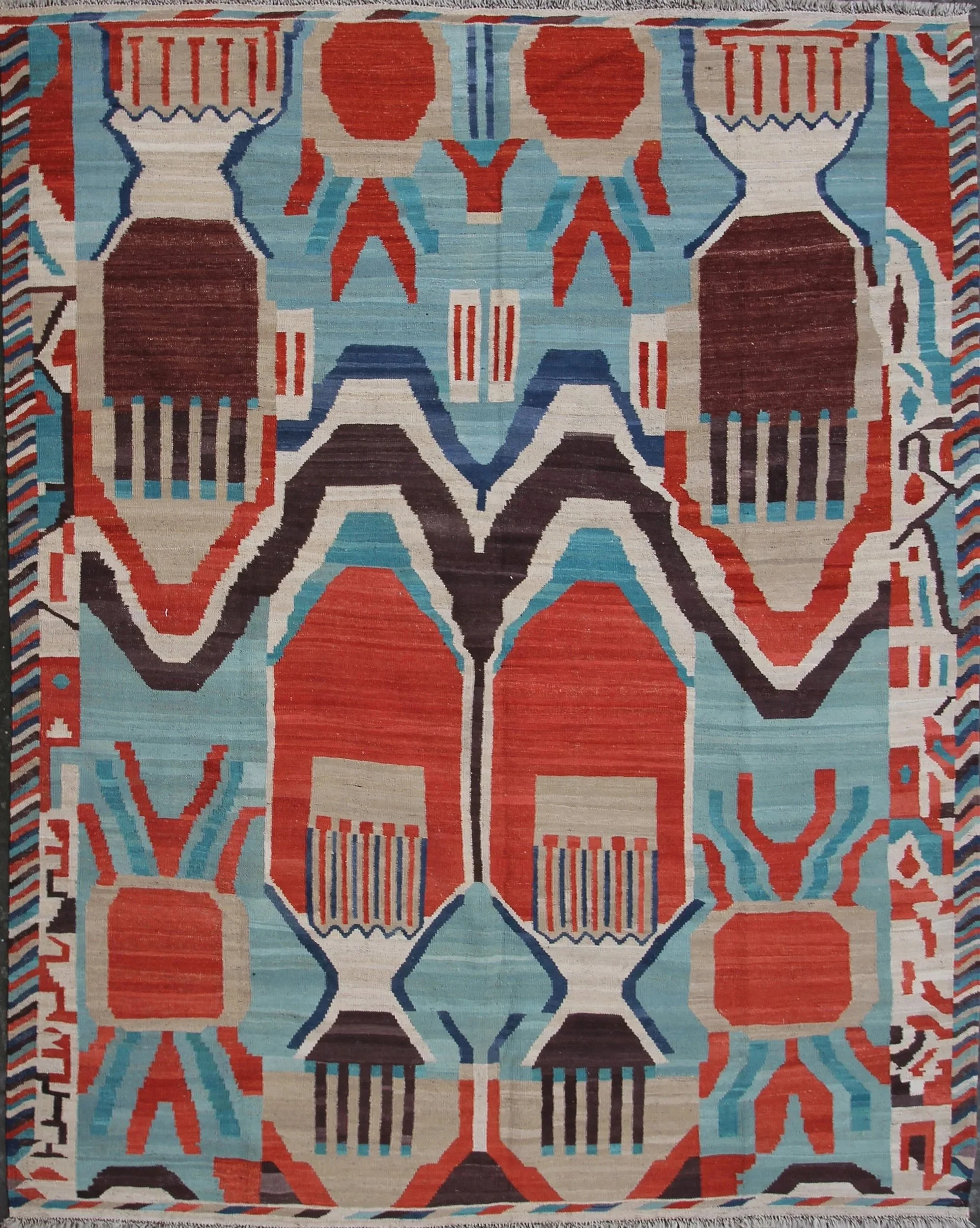
Kilim Ikat refers to a flat-woven textile style that combines traditional ikat dye-resist weaving with kilim weaving techniques, historically associated with Central Asian textile traditions—particularly regions like Uzbekistan, Turkmenistan, and surrounding areas. Ikat describes the method where yarns are tie-dyed before weaving, creating the characteristic blurred, geometric or abstract patterns. Kilim refers to the flat-woven structure without a pile, typical of many tribal and nomadic weavings in Central Asia. This interpretation is hand-woven in Afghanistan using traditional looms and techniques, and is made from wool, reflecting the classic materials of both ikat and kilim traditions.
Kilim Ikat refers to a flat-woven textile style that combines traditional ikat dye-resist weaving with kilim weaving techniques, historically associated with Central Asian textile traditions—particularly regions like Uzbekistan, Turkmenistan, and surrounding areas. Ikat describes the method where yarns are tie-dyed before weaving, creating the characteristic blurred, geometric or abstract patterns. Kilim refers to the flat-woven structure without a pile, typical of many tribal and nomadic weavings in Central Asia. This interpretation is hand-woven in Afghanistan using traditional looms and techniques, and is made from wool, reflecting the classic materials of both ikat and kilim traditions.